
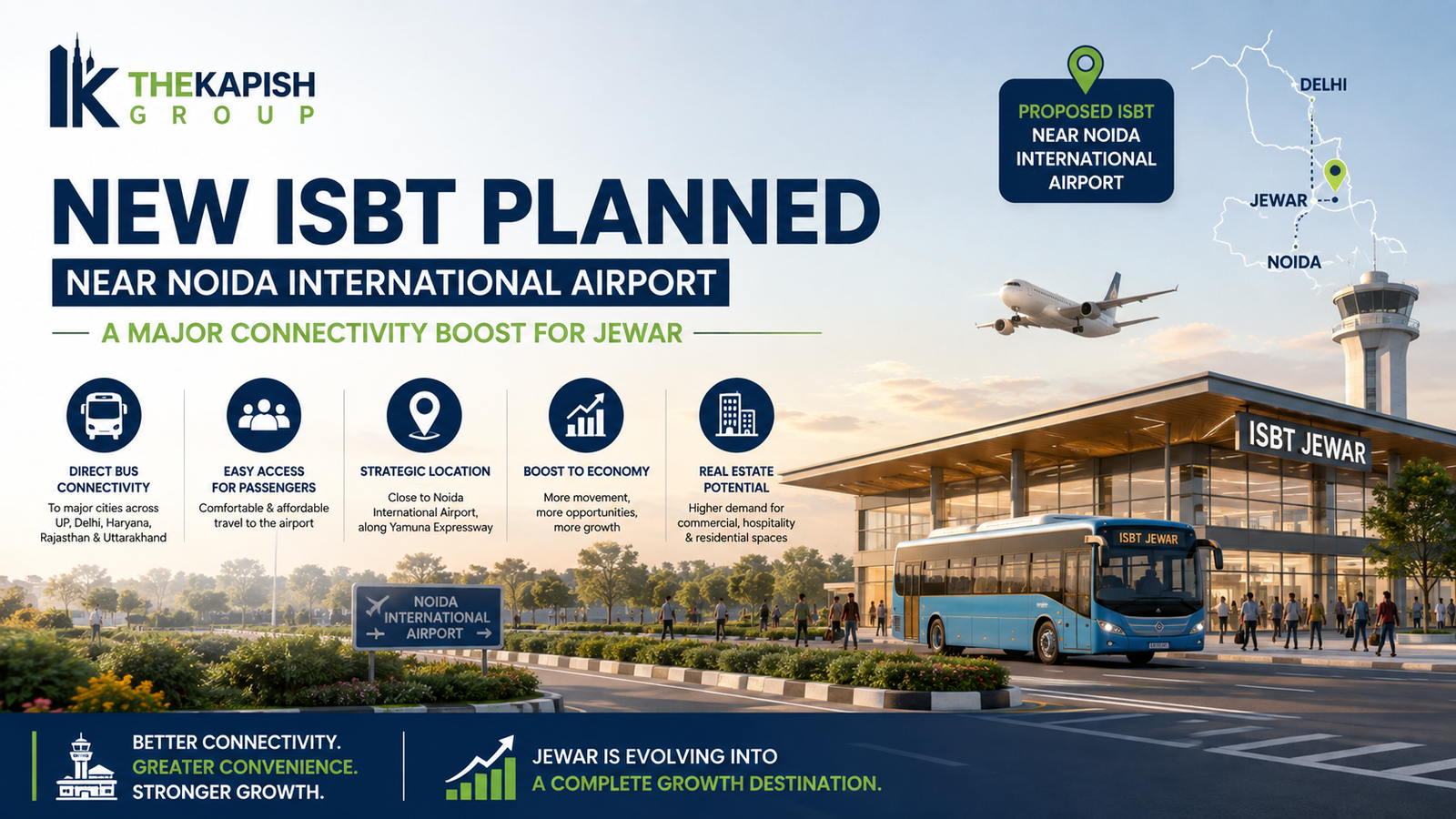
The connectivity ecosystem around Noida International Airport (Jewar) is set for another major upgrade. The Uttar Pradesh government is moving forward with a proposal for a dedicated Inter-State Bus Terminal (ISBT) near the airport, aimed at providing direct and affordable connectivity between Jewar and major cities across neighbouring states.
The development is significant not only for passengers but also for the wider real-estate and commercial landscape around the Yamuna Expressway.
What Is Planned?
Jewar MLA Dhirendra Singh recently met Uttar Pradesh Chief Minister Yogi Adityanath regarding the proposed terminal. According to reports, the Chief Minister agreed to the proposal and directed the Additional Chief Secretary, Transport, to initiate the necessary process.
A formal request has also been made for YEIDA to identify and provide suitable land for the terminal. However, the final location, project size and construction timeline have not yet been publicly finalised.
The proposed ISBT is expected to establish direct connections between Noida International Airport and destinations across:
- Uttar Pradesh
- Delhi
- Haryana
- Rajasthan
- Uttarakhand
- Other neighbouring regions
It could therefore become an important interchange point for passengers travelling between the airport and the wider NCR.
Why Does Jewar Need a Dedicated ISBT?
Public transport around the airport is already expanding, but the network is still evolving.
The Noida, Greater Noida and Yamuna authorities introduced 100 city buses in June, including services between Botanical Garden and the airport. Reports noted that some services required passengers to use a shuttle for the final stretch to the terminal.
The airport currently also lists public-transport connectivity through DTC, Haryana Roadways and Uttarakhand Transport Corporation, along with city and airport shuttle services.
A dedicated ISBT could bring many of these regional movements together at one organised transport node.
Delhi Connectivity Is Also Expanding
The ISBT proposal comes alongside another important development.
Direct DTC bus connectivity from Anand Vihar ISBT and Kashmere Gate ISBT to Noida International Airport has also been proposed. The service is linked to finalisation of the required transport arrangements between Delhi and Uttar Pradesh authorities.
Together, these developments indicate a larger shift toward making Jewar Airport accessible through public transport rather than relying predominantly on private vehicles.
What Could an ISBT Mean for Real Estate?
Transport terminals can influence surrounding development differently from highways or expressways.
An ISBT brings continuous passenger movement and daily commercial activity. If the proposed terminal develops into a major regional transport interchange, surrounding areas could eventually see demand for:
- Hotels and budget accommodation
- Restaurants and food outlets
- Retail and convenience stores
- Commercial spaces
- Taxi and mobility services
- Warehousing and logistics support
- Employee and rental housing
The impact, however, will depend heavily on the final location of the ISBT, road connectivity, adjoining land use and actual passenger volumes.
Therefore, investors should avoid making decisions simply on the basis of an announcement.
From Airport Connectivity to a Multimodal Transport Hub
The bigger story is how transportation around Jewar is evolving.
Noida International Airport is increasingly being connected through a combination of expressways, buses, regional transport services and future mass-transit infrastructure.
A dedicated interstate terminal would add another layer to this network by linking aviation directly with long-distance road transport.
For the surrounding region, that matters because stronger mobility supports more than passenger convenience. It also improves access for the workforce serving the growing industrial, electronics, logistics, hospitality and commercial ecosystem across YEIDA.
What Investors Should Watch Next
The most important development will now be the final land allocation and location of the proposed ISBT.
Once the site is identified, investors should examine:
Distance from the airport, road frontage, surrounding YEIDA sectors, approved land use, commercial development plans and future transport integration.
The strongest opportunities may not necessarily be the plots physically closest to the terminal, but locations positioned along established and legally planned growth corridors.
How The Kapish Group Helps
The Kapish Group helps investors assess opportunities around Noida International Airport and YEIDA through land verification, master-plan analysis, authority checks and location-specific due diligence. We help clients understand where infrastructure is genuinely planned and what that development could mean before they make an investment decision.